
Archives
 v15i1.403
eISSN: 1800-427X (online)
DOI:10.47605/tapro.v15i1.403
Submitted date: 12 February 2025
Accepted date: 31 May 2025
Published date: 31 May 2026
Pp. 74–86.
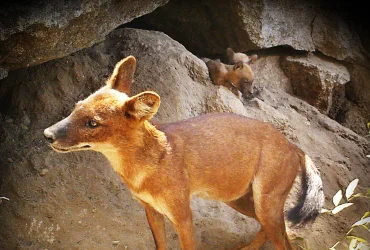
HABITAT SUITABILITY AND PREY RICHNESS PREDICT DISTRIBUTION CONSTRAINTS OF THE ENDANGERED DHOLE, Cuon alpinus (MAMMALIA: CARNIVORA) IN WEST SUMATRA
Inda D. Solina*, Wilson Novarino, Muhammad H. Saputra, Rajif Iryadi, Aditya Hani, Eko Pujiono, Wieke Herningtyas, Nida Humaida, Jalma G. Sukmawati,
Muhammad B. Atmaja, Reni S. Wahyuningtyas & Sutomo Sutomo
*Corresponding author. E-mail: solina.inda@gmail.com
Abstract
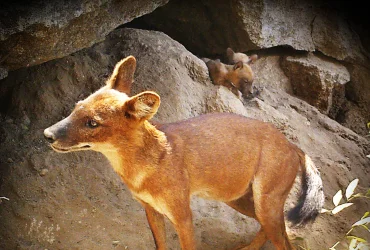
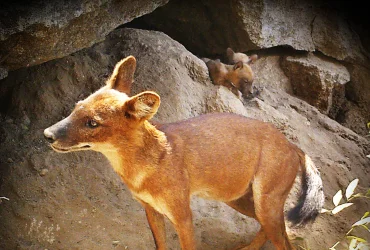
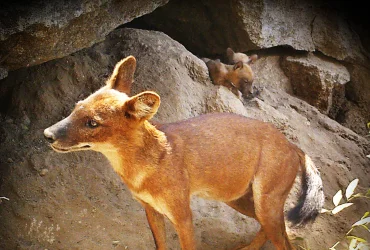
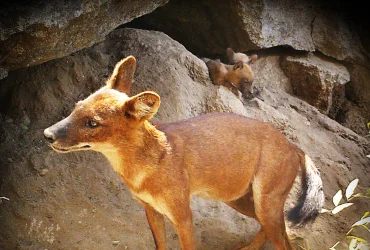
The endangered Cuon alpinus faces severe habitat fragmentation and population decline across Asia, including Sumatra, where both the species and its prey are increasingly threatened. Limited ecological data further constrain conservation efforts. This study identifies suitable habitats for dholes and their prey in West Sumatra using MaxEnt modelling, integrating occurrence data from camera traps, GBIF, and Camera Trap Asia with environmental predictors (altitude, land cover, rivers, roads, and bioclimatic variables). Potential prey included mammals from 12 families and one avian family. Dholes were confirmed at nine locations, and model performance was robust (AUC > 0.8, mostly > 0.9). Only 4% of West Sumatra was predicted as a highly suitable habitat, concentrated in primary (25.53%) and secondary (39.96%) forests, largely within protected areas. Prey distributions were heterogeneous, with only one family showing broad overlap (33.57%) with dhole occurrence. Land cover was the primary driver of both dhole and prey distributions. These findings highlight a highly constrained habitat for dholes, emphasizing the need to protect and restore primary and secondary forests while maintaining prey diversity. The spatial outputs provide practical guidance for protected area zoning, corridor design, and landscape-level management.
Section Editor: Simon Hedges
DOI:10.47605/tapro.v15i1.403
Submitted date: 12 February 2025
Accepted date: 31 May 2025
Published date: 31 May 2026
Pp. 74–86.
HABITAT SUITABILITY AND PREY RICHNESS PREDICT DISTRIBUTION CONSTRAINTS OF THE ENDANGERED DHOLE, Cuon alpinus (MAMMALIA: CARNIVORA) IN WEST SUMATRA
Inda D. Solina*, Wilson Novarino, Muhammad H. Saputra, Rajif Iryadi, Aditya Hani, Eko Pujiono, Wieke Herningtyas, Nida Humaida, Jalma G. Sukmawati,
Muhammad B. Atmaja, Reni S. Wahyuningtyas & Sutomo Sutomo
*Corresponding author. E-mail: solina.inda@gmail.com
Abstract
The endangered Cuon alpinus faces severe habitat fragmentation and population decline across Asia, including Sumatra, where both the species and its prey are increasingly threatened. Limited ecological data further constrain conservation efforts. This study identifies suitable habitats for dholes and their prey in West Sumatra using MaxEnt modelling, integrating occurrence data from camera traps, GBIF, and Camera Trap Asia with environmental predictors (altitude, land cover, rivers, roads, and bioclimatic variables). Potential prey included mammals from 12 families and one avian family. Dholes were confirmed at nine locations, and model performance was robust (AUC > 0.8, mostly > 0.9). Only 4% of West Sumatra was predicted as a highly suitable habitat, concentrated in primary (25.53%) and secondary (39.96%) forests, largely within protected areas. Prey distributions were heterogeneous, with only one family showing broad overlap (33.57%) with dhole occurrence. Land cover was the primary driver of both dhole and prey distributions. These findings highlight a highly constrained habitat for dholes, emphasizing the need to protect and restore primary and secondary forests while maintaining prey diversity. The spatial outputs provide practical guidance for protected area zoning, corridor design, and landscape-level management.
Section Editor: Simon Hedges
 v15i1.402
eISSN: 1800-427X (online)
DOI:10.47605/tapro.v15i1.402
Submitted date: 16 November 2025
Accepted date: 9 April 2026
Published date: 27 May 2026
Pp. 63–73.
A NEW TOAD SPECIES (AMPHIBIA: BUFONIDAE: Duttaphrynus) FROM THE KHASI HILLS, MEGHALAYA, NORTHEASTERN INDIA
Holiness Warjri, Madhurima Das, A.A. Thasun Amarasinghe & Jayaditya Purkayastha*
*Corresponding author. E-mail: mail.jayaditya@gmail.com
Abstract
We describe a new bufonid toad from Mawphlang in the Khasi Hills, Meghalaya, northeastern India, based on an integrative taxonomic assessment combining external morphology and mitochondrial 16S rRNA sequence data. Phylogenetic analyses recover the Khasi Hills specimens as a distinct and well-supported monophyletic lineage within Duttaphrynus, forming a clade sister to an undescribed lineage from Chin State, Myanmar, and clearly separated from the most closely related congeners, D. stuarti and D. chandai. Uncorrected mitochondrial 16S sequence divergence between the new species and these taxa ranges from 4.4–6.7%, consistent with interspecific differentiation in Asian bufonids. Morphometric analyses based on allometrically size-corrected measurements further support its distinctiveness. The new species is characterized by a small adult body size (male SVL 40.0–41.8 mm), absence of cranial ridges, a distinct but small tympanum, moderate toe webbing, specific digital length proportions, and a dorsum bearing numerous pointed keratinized warts. The concordant molecular, multivariate morphometric, and qualitative morphological evidence demonstrates that the Khasi Hills population represents a previously unrecognized evolutionary lineage. The species is currently known only from its type locality in montane habitats of the East Khasi Hills, highlighting the continued importance of the Meghalaya Plateau as a center of amphibian diversity and endemism within the Indo-Burma biodiversity hotspot.
Section Editor: Enrique La Marca
LSID:urn:lsid:zoobank.org
DOI:10.47605/tapro.v15i1.402
Submitted date: 16 November 2025
Accepted date: 9 April 2026
Published date: 27 May 2026
Pp. 63–73.
A NEW TOAD SPECIES (AMPHIBIA: BUFONIDAE: Duttaphrynus) FROM THE KHASI HILLS, MEGHALAYA, NORTHEASTERN INDIA
Holiness Warjri, Madhurima Das, A.A. Thasun Amarasinghe & Jayaditya Purkayastha*
*Corresponding author. E-mail: mail.jayaditya@gmail.com
Abstract
We describe a new bufonid toad from Mawphlang in the Khasi Hills, Meghalaya, northeastern India, based on an integrative taxonomic assessment combining external morphology and mitochondrial 16S rRNA sequence data. Phylogenetic analyses recover the Khasi Hills specimens as a distinct and well-supported monophyletic lineage within Duttaphrynus, forming a clade sister to an undescribed lineage from Chin State, Myanmar, and clearly separated from the most closely related congeners, D. stuarti and D. chandai. Uncorrected mitochondrial 16S sequence divergence between the new species and these taxa ranges from 4.4–6.7%, consistent with interspecific differentiation in Asian bufonids. Morphometric analyses based on allometrically size-corrected measurements further support its distinctiveness. The new species is characterized by a small adult body size (male SVL 40.0–41.8 mm), absence of cranial ridges, a distinct but small tympanum, moderate toe webbing, specific digital length proportions, and a dorsum bearing numerous pointed keratinized warts. The concordant molecular, multivariate morphometric, and qualitative morphological evidence demonstrates that the Khasi Hills population represents a previously unrecognized evolutionary lineage. The species is currently known only from its type locality in montane habitats of the East Khasi Hills, highlighting the continued importance of the Meghalaya Plateau as a center of amphibian diversity and endemism within the Indo-Burma biodiversity hotspot.
Section Editor: Enrique La Marca
LSID:urn:lsid:zoobank.org
 v15i1.401
eISSN: 1800-427X (online)
DOI:10.47605/tapro.v15i1.401
Submitted date: 22 January 2025
Accepted date: 9 April 2026
Published date: 16 May 2026
Pp. 56–62.
A NEW SPINY EGGPLANT SPECIES OF THE GENUS Solanum L. (ANGIOSPERMS: SOLANACEAE) FROM INDONESIAN BORNEO
Esthi L. Agustiani*, Siti Susiarti, Tutie Djarwaningsih & Muhammad R. Hariri
*Corresponding author. E-mail: esth003@brin.go.id
Abstract
A novel Solanum species belonging to the Leptostemonum clade has been identified in the Indonesian flora. The new species is currently exclusively found in East and South Kalimantan. It is primarily found in the gardens of inhabitants of Kalimantan. It thrives in a variety of soil types, including sandy loam, well-drained, and acidic black soils. This species resembles S. lasiocarpum but can be distinguished by its nearly as-long-as-wide leaf blades, very shallowly lobed leaves, a puberulent adaxial surface with occasional long-stalked stellate hairs, an oblique leaf base, slightly longer pedicels, larger corolla lobes, and a puberulent, pendent mature fruit. A detailed description, taxonomic note, and an initial evaluation of the conservation status of this species are provided.
Section Editor: Gustavo Heiden
DOI:10.47605/tapro.v15i1.401
Submitted date: 22 January 2025
Accepted date: 9 April 2026
Published date: 16 May 2026
Pp. 56–62.
A NEW SPINY EGGPLANT SPECIES OF THE GENUS Solanum L. (ANGIOSPERMS: SOLANACEAE) FROM INDONESIAN BORNEO
Esthi L. Agustiani*, Siti Susiarti, Tutie Djarwaningsih & Muhammad R. Hariri
*Corresponding author. E-mail: esth003@brin.go.id
Abstract
A novel Solanum species belonging to the Leptostemonum clade has been identified in the Indonesian flora. The new species is currently exclusively found in East and South Kalimantan. It is primarily found in the gardens of inhabitants of Kalimantan. It thrives in a variety of soil types, including sandy loam, well-drained, and acidic black soils. This species resembles S. lasiocarpum but can be distinguished by its nearly as-long-as-wide leaf blades, very shallowly lobed leaves, a puberulent adaxial surface with occasional long-stalked stellate hairs, an oblique leaf base, slightly longer pedicels, larger corolla lobes, and a puberulent, pendent mature fruit. A detailed description, taxonomic note, and an initial evaluation of the conservation status of this species are provided.
Section Editor: Gustavo Heiden
 v15i1.400
eISSN: 1800-427X (online)
DOI:10.47605/tapro.v15i1.400
Submitted date: 5 February 2026
Accepted date: 26 April 2026
Published date: 16 May 2026
Pp. 48–55.
PREVALENCE OF LEPTOSPIROSIS AND AGE STRUCTURE OF Rattus norvegicus (Berkenhout, 1769) (MAMMALIA: RODENTIA: MURIDAE) ACROSS URBAN AREAS IN INDONESIA
Ristiyanto Ristiyanto*, Arief Mulyono, Farida D. Handayani, Raden A. Wigati, M. Mujiyanto, Triwibowo A. Garjito, Agung P. Kesuma, Tri Wahono, Muhammad C. Hidajat, Dian E. Setyaningtyas, Anis N. Widayati & Ibnu Maryanto
*Corresponding author. E-mail: rist009@brin.go.id
Abstract
This study examined the age structure and prevalence of Leptospira infection in Rattus norvegicus to assess age-related transmission of leptospirosis. Sampling was conducted from 2015 to 2021 across five urban locations in Indonesia: Semarang City, Demak Regency, Bandung Regency, Makassar City, and Samarinda. Rats were trapped in indoor and outdoor habitats, euthanized, and sampled for blood and eye lenses. Conventional PCR was used to detect Leptospira DNA in kidney samples, while lens weight was used to estimate age. A total of 263 rats were captured (159 females, 104 males), ranging in age from 126.4 to 1037.5 days. Infection prevalence was highest among rats aged 240.3–354.2 days (9 individuals) and 126.4–240.3 days (7 individuals), with most positives occurring indoors (23 individuals) compared to only 10 individuals outdoors. Overall, 12.5% of rats (33 individuals) tested positive, with 69.7% (23 individuals) recorded indoors and 30.3% (10 individuals) outdoors. Females showed slightly higher prevalence (13.2%, 21 individuals) than males (11.5%, 12 individuals). The predominance of infected rats in indoor habitats indicates a higher risk of transmission, particularly in Semarang and Demak.
Section Editor: Caio G. Zeppelini
DOI:10.47605/tapro.v15i1.400
Submitted date: 5 February 2026
Accepted date: 26 April 2026
Published date: 16 May 2026
Pp. 48–55.
PREVALENCE OF LEPTOSPIROSIS AND AGE STRUCTURE OF Rattus norvegicus (Berkenhout, 1769) (MAMMALIA: RODENTIA: MURIDAE) ACROSS URBAN AREAS IN INDONESIA
Ristiyanto Ristiyanto*, Arief Mulyono, Farida D. Handayani, Raden A. Wigati, M. Mujiyanto, Triwibowo A. Garjito, Agung P. Kesuma, Tri Wahono, Muhammad C. Hidajat, Dian E. Setyaningtyas, Anis N. Widayati & Ibnu Maryanto
*Corresponding author. E-mail: rist009@brin.go.id
Abstract
This study examined the age structure and prevalence of Leptospira infection in Rattus norvegicus to assess age-related transmission of leptospirosis. Sampling was conducted from 2015 to 2021 across five urban locations in Indonesia: Semarang City, Demak Regency, Bandung Regency, Makassar City, and Samarinda. Rats were trapped in indoor and outdoor habitats, euthanized, and sampled for blood and eye lenses. Conventional PCR was used to detect Leptospira DNA in kidney samples, while lens weight was used to estimate age. A total of 263 rats were captured (159 females, 104 males), ranging in age from 126.4 to 1037.5 days. Infection prevalence was highest among rats aged 240.3–354.2 days (9 individuals) and 126.4–240.3 days (7 individuals), with most positives occurring indoors (23 individuals) compared to only 10 individuals outdoors. Overall, 12.5% of rats (33 individuals) tested positive, with 69.7% (23 individuals) recorded indoors and 30.3% (10 individuals) outdoors. Females showed slightly higher prevalence (13.2%, 21 individuals) than males (11.5%, 12 individuals). The predominance of infected rats in indoor habitats indicates a higher risk of transmission, particularly in Semarang and Demak.
Section Editor: Caio G. Zeppelini
 v15i1.399
eISSN: 1800-427X (online)
DOI:10.47605/tapro.v15i1.399
Submitted date: 7 February 2025
Accepted date: 10 March 2026
Published date: 3 May 2026
Pp. 38–47, Pl. 12.
Glyphoglossus minutus (DAS, YAAKOB, AND LIM, 2004): A JUNIOR SUBJECTIVE SYNONYM OF Glyphoglossus volzi (VAN KAMPEN, 1905) (ANURA: MICROHYLIDAE)
Alamsyah E.N. Herlambang*, Arief Tajalli, Masafumi Matsui, Kanto Nishikawa, Norhayati Ahmad, Daicus M. Belabut & Amir Hamidy
*Corresponding author. E-mail: elangalamsyah@gmail.com
Abstract
Glyphoglossus volzi (van Kampen, 1905; Sumatra) and G. minutus (Das, Yaakob & Lim, 2004; Peninsular Malaysia) have been treated as distinct species based largely on morphological characters. We examined a preserved male of Glyphoglossus from Jambi (central Sumatra), compared it to the lectotype of G. volzi and topotypic G. minutus, and reconstructed relationships using a 448 bp fragment of mitochondrial 16S rRNA. Phylogenetic analyses (BI, ML) place the Jambi specimen with topotypic G. minutus with shallow divergence (p-distance 1.86%), and morphological comparisons show concordant diagnostic traits and overlapping mensural data. Given the congruence of evidence and the historical taxonomic context, we regard G. minutus as conspecific with G. volzi and formally place G. minutus in synonymy under G. volzi. We clarify generic and species-level nomenclature, correct several literature and distributional statements, and highlight the limits of short mtDNA fragments for delimitation in Microhylidae. Our results underscore the value of targeted sampling of elusive, fossorial taxa in biogeographically connected regions. On the basis of concordant morphological evidence and 16S data, we treat Calluella minuta as conspecific with Glyphoglossus volzi and place it in synonymy.
Section Editor: Enrique La Marca
DOI:10.47605/tapro.v15i1.399
Submitted date: 7 February 2025
Accepted date: 10 March 2026
Published date: 3 May 2026
Pp. 38–47, Pl. 12.
Glyphoglossus minutus (DAS, YAAKOB, AND LIM, 2004): A JUNIOR SUBJECTIVE SYNONYM OF Glyphoglossus volzi (VAN KAMPEN, 1905) (ANURA: MICROHYLIDAE)
Alamsyah E.N. Herlambang*, Arief Tajalli, Masafumi Matsui, Kanto Nishikawa, Norhayati Ahmad, Daicus M. Belabut & Amir Hamidy
*Corresponding author. E-mail: elangalamsyah@gmail.com
Abstract
Glyphoglossus volzi (van Kampen, 1905; Sumatra) and G. minutus (Das, Yaakob & Lim, 2004; Peninsular Malaysia) have been treated as distinct species based largely on morphological characters. We examined a preserved male of Glyphoglossus from Jambi (central Sumatra), compared it to the lectotype of G. volzi and topotypic G. minutus, and reconstructed relationships using a 448 bp fragment of mitochondrial 16S rRNA. Phylogenetic analyses (BI, ML) place the Jambi specimen with topotypic G. minutus with shallow divergence (p-distance 1.86%), and morphological comparisons show concordant diagnostic traits and overlapping mensural data. Given the congruence of evidence and the historical taxonomic context, we regard G. minutus as conspecific with G. volzi and formally place G. minutus in synonymy under G. volzi. We clarify generic and species-level nomenclature, correct several literature and distributional statements, and highlight the limits of short mtDNA fragments for delimitation in Microhylidae. Our results underscore the value of targeted sampling of elusive, fossorial taxa in biogeographically connected regions. On the basis of concordant morphological evidence and 16S data, we treat Calluella minuta as conspecific with Glyphoglossus volzi and place it in synonymy.
Section Editor: Enrique La Marca
Hubungi Kami
The ultimate aim of the journal is to provide an effective medium for communication of the latest and best scientific information.


Copyright © 2020 Taprobanica. All Rights Reserved
Jasa Pembuatan Website by IKT